
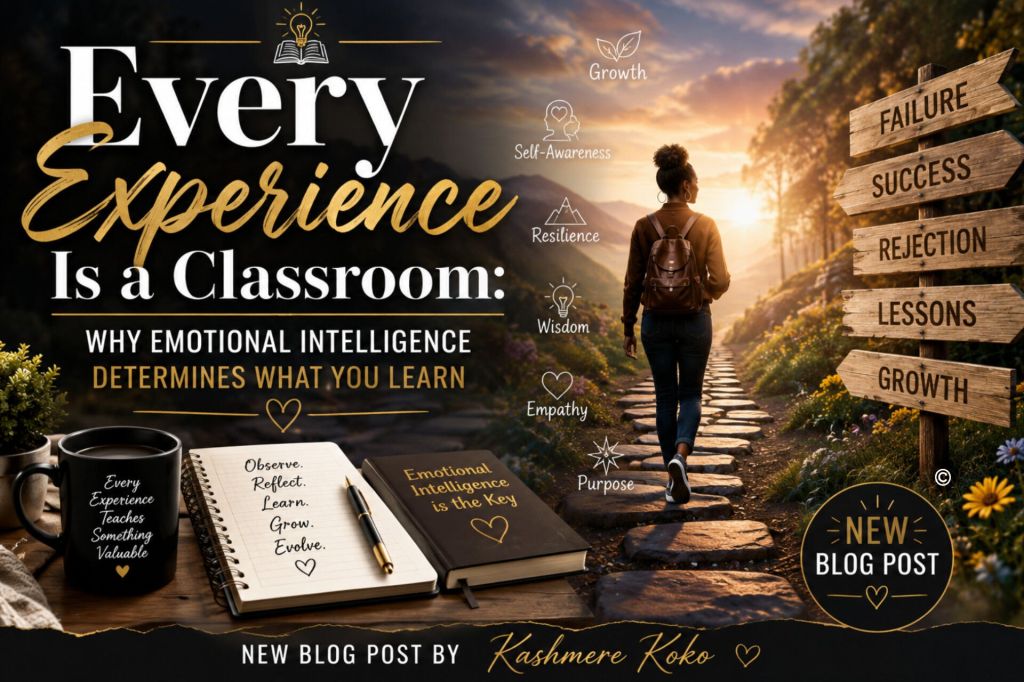
“I choose to learn and grow through every experience life brings me.”
Life rarely teaches through comfort. Most of our greatest lessons arrive disguised as failure, disappointment, rejection, conflict, uncertainty, or unexpected change. Some experiences feel rewarding and affirming, while others leave emotional bruises that take time to heal. But hidden inside every moment good or bad is something valuable waiting to be understood.
The people who grow the most in life are not necessarily the smartest, richest, or most talented. They are the ones who learn intentionally. They train themselves to ask one powerful question during every season of life:
“What is this experience trying to teach me?”
That mindset changes everything.
Every Experience Carries a Lesson
Many people move through life reacting emotionally without reflecting deeply. They repeat the same relationship patterns, workplace frustrations, communication mistakes, or self-sabotaging habits because they focus only on the pain of the experience instead of the lesson within it.
Every experience offers information.
Success teaches confidence, discipline, and strategy.
Failure teaches humility, resilience, and adaptation.
Conflict teaches communication and emotional control.
Disappointment teaches expectations and acceptance.
Loss teaches gratitude and perspective.
Rejection teaches redirection and self-worth.
The lesson may not always appear immediately. Sometimes understanding arrives months or years later. But growth begins the moment you stop asking, “Why is this happening to me?” and start asking, “What can this teach me?”
That shift transforms suffering into wisdom.
Emotional Intelligence Is the Key to Learning From Life
Learning from experience requires more than intelligence. It requires emotional intelligence.
Emotional intelligence is the ability to recognize, understand, manage, and respond to emotions both your own and the emotions of others. Without emotional intelligence, experiences often become emotional traps instead of learning opportunities.
When emotions are unmanaged, people react impulsively. They blame others, avoid accountability, become defensive, or shut down completely. In those moments, growth becomes impossible because emotion overwhelms reflection.
Emotionally intelligent people do something different:
They pause before reacting.
They examine their feelings honestly.
They seek understanding instead of immediate judgment.
They remain open to feedback.
They separate temporary emotions from permanent truths.
This process allows wisdom to develop.
Self-Awareness Creates Growth
The first component of emotional intelligence is self-awareness.
Self-awareness means paying attention to your emotional patterns, triggers, strengths, weaknesses, fears, and behaviors. Without self-awareness, people often repeat cycles unconsciously.
For example:
Someone who fears rejection may sabotage relationships before intimacy develops.
Someone who struggles with criticism may become defensive instead of improving.
Someone who avoids discomfort may never develop resilience.
Experience alone does not create growth. Reflection does.
A painful breakup can either make someone bitter or emotionally mature. A career setback can either destroy confidence or build determination. The difference is self-awareness.
Emotionally intelligent people ask themselves difficult questions:
Why did this situation affect me so deeply?
What role did I play?
What emotional patterns keep repeating?
What boundaries do I need?
What strengths did this experience reveal?
Honest reflection turns experiences into education.
Emotional Control Prevents Destructive Decisions
Strong emotions are not the enemy. Uncontrolled emotions are.
Many people make life-changing mistakes during moments of anger, fear, insecurity, jealousy, frustration, or sadness. Emotional intelligence helps people respond thoughtfully instead of reacting impulsively.
This does not mean suppressing emotions. It means understanding them without allowing them to control your actions.
A person with emotional intelligence can:
Feel angry without becoming destructive.
Feel hurt without seeking revenge.
Feel afraid without quitting.
Feel rejected without losing self-worth.
Feel stressed without treating others poorly.
That emotional discipline creates healthier relationships, better decisions, and stronger personal growth.
Every Person You Meet Teaches You Something
Experiences are not limited to events. People are experiences too.
Some people teach you how to trust.
Some teach you how to set boundaries.
Some teach you patience.
Some teach you what love should feel like.
Others teach you what never to tolerate again.
Even difficult people can become powerful teachers if you approach experiences with emotional intelligence. Instead of holding onto bitterness, you begin extracting wisdom.
You learn:
How to communicate better.
How to protect your peace.
How to recognize manipulation.
How to value authenticity.
How to strengthen emotional resilience.
The lesson matters more than the pain.
Growth Requires Humility
One of the greatest barriers to learning is ego.
People who believe they already know everything rarely grow. Emotional intelligence requires humility the willingness to admit mistakes, receive correction, and acknowledge areas needing improvement.
Humility does not weaken confidence. It strengthens maturity.
Growth begins when you can say:
“I handled that poorly.”
“I need to improve my communication.”
“I overreacted emotionally.”
“I misunderstood the situation.”
“I still have more to learn.”
Life becomes much more meaningful when you stop trying to protect your ego and start trying to develop your character.
Difficult Seasons Often Produce the Greatest Wisdom
The hardest experiences in life often become the most transformative.
Pain slows people down long enough to reflect deeply. Struggle exposes priorities. Loss reveals what truly matters. Failure builds resilience that comfort never could.
Emotionally intelligent people understand that difficult seasons are not always punishments. Sometimes they are preparation.
A setback may be teaching patience.
A betrayal may be teaching discernment.
A delay may be teaching endurance.
A disappointment may be redirecting your path.
This perspective does not minimize pain. It gives pain purpose.
Learning Is a Lifelong Process
No one ever reaches a point where learning stops.
Every stage of life brings new lessons:
Childhood teaches curiosity.
Adulthood teaches responsibility.
Relationships teach emotional depth.
Parenthood teaches sacrifice.
Leadership teaches accountability.
Aging teaches perspective.
People who remain emotionally intelligent continue evolving instead of becoming emotionally rigid. They stay teachable, adaptable, and open-minded.
That mindset creates wisdom.
Final Thoughts
Every experience in life contains a lesson, but not everyone chooses to learn from it. Some people repeat cycles for years because they focus only on emotions instead of growth. Others transform pain into wisdom, setbacks into strength, and challenges into opportunities for self-discovery.
The difference is emotional intelligence.
When you develop self-awareness, emotional control, humility, empathy, and reflection, life itself becomes your teacher. You stop viewing experiences as random events and start recognizing them as opportunities to grow into a wiser, stronger, and more emotionally mature person.
No experience is wasted when you are willing to learn from it.
Even the painful ones can become part of your transformation.
 kashmerekoko.com
You must be logged in to post a comment.