
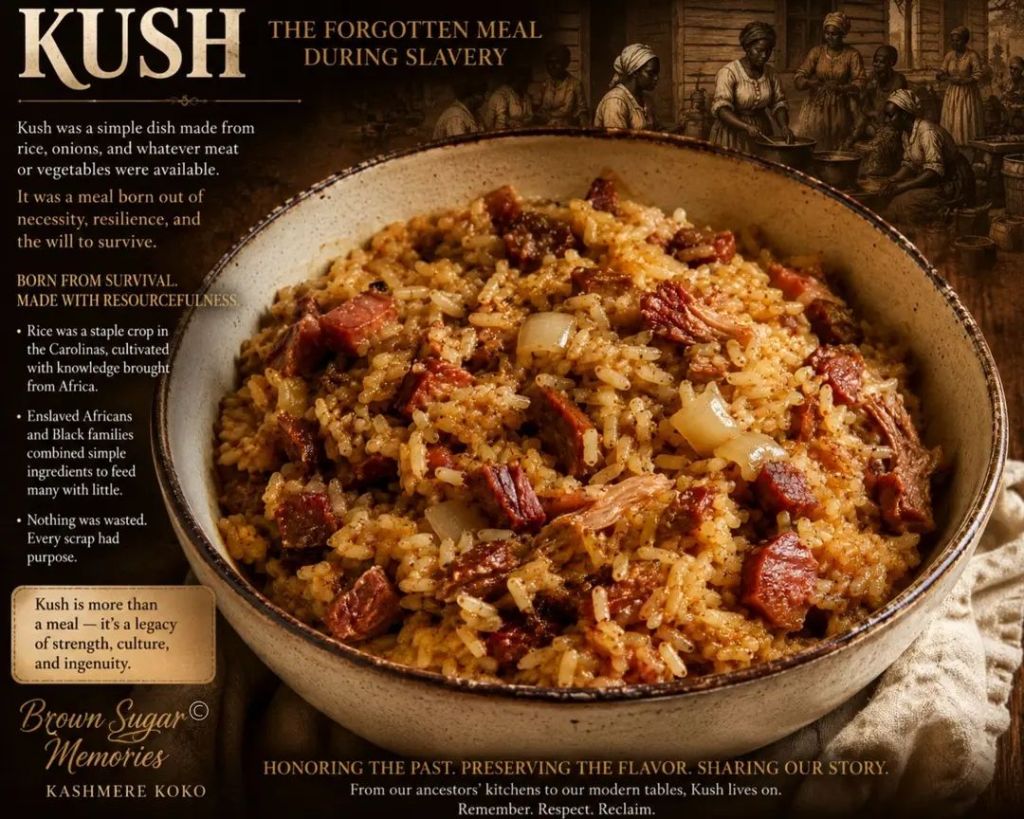
Black families throughout the Carolinas were creating meals out of necessity. One of those dishes was Kush a simple but meaningful meal made from rice, onions, and whatever meat, vegetables, or seasonings were available.
Kush was never intended to be fancy. It was born from resilience, creativity, and the determination to feed a family when resources were scarce.
What Was Kush?
At its most basic, Kush consisted of:
Rice
Onions
Salt and pepper
Any available meat, such as salt pork, smoked meat, chicken, or scraps
Seasonal vegetables when available
Every household prepared it differently. Some families made it thick like a rice stew, while others cooked it drier, similar to a pilaf or hash. The recipe often changed depending on what was growing in the garden, what could be hunted, or what was left in the pantry.
Roots in Survival
Many food historians believe Kush developed among enslaved Africans and later evolved within Black communities across the Carolinas. Rice was a staple crop in the region, some enslaved Africans brought extensive rice-growing knowledge from West Africa.
When food supplies were limited, Kush allowed families to:
Stretch small amounts of meat
Feed large households
Reduce food waste
Create a hearty meal from inexpensive ingredients
The dish represented a common philosophy among Black enslaved Black American cooks: nothing goes to waste.
Why Kush Is Forgotten
Unlike dishes such as fried chicken, macaroni and cheese, collard greens, or gumbo, Kush was rarely written down.
Several factors contributed to its disappearance:
1. It Was Considered Everyday Food
Kush wasn’t viewed as a special occasion meal. It was simply dinner. Because it was so common, many families never thought to preserve the recipe.
2. Recipes Were Passed Orally
Most cooks learned by watching parents and grandparents. Measurements were rarely used, making it difficult to document.
3. Changing Economic Conditions
As families gained access to more ingredients and broader food choices, many survival foods gradually disappeared from daily cooking.
4. Restaurant Culture Ignored It
Restaurants often focused on dishes considered more marketable. Kush remained a home-cooked meal rather than a menu item.
More Than a Meal
Kush tells a story about Black ingenuity and endurance.
It reminds us that many beloved Southern foods were created not from abundance, but from making the most of very little. Dishes like Kush helped families survive hard times while preserving traditions rooted in community and resourcefulness.
A Legacy Worth Remembering
Today, there is renewed interest in recovering forgotten enslaved Black American food traditions. Kush deserves a place in those conversations because it represents an important chapter of Southern Black culinary history.
While the ingredients may have been simple, the lesson behind the dish is powerful:
Our ancestors knew how to create comfort, nourishment, and dignity from whatever they had available.
Kush was never just rice and onions.
It was survival. It was creativity. It was history in a pot.
 kashmerekoko.com
You must be logged in to post a comment.